
Learning center
What is person-centered planning?
Person-centered planning means the person receiving support leads the conversation about their own life, and the services are shaped around each individual — not the other way around.
Written and reviewed by the LaBase Living program team — Iowa Medicaid HCBS-certified providers of supported community living and host home services in Cedar Rapids, Iowa. Reviewed August 2026.
The short answer
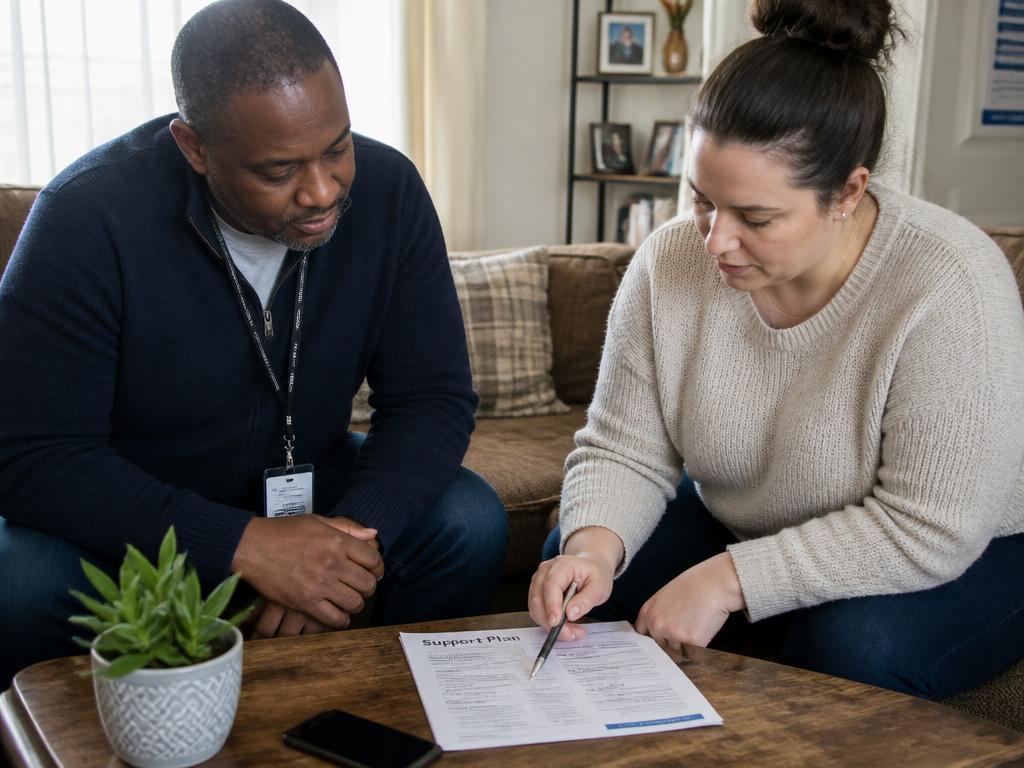
Person-centered planning is a process, not a form. The person says what they want their week to look like, what they want to get better at, and what they want left alone. The team’s job is to build supports around that — then say honestly what it will take.
Plans written in human language
A good plan reads like a description of a life, around real outcomes: a job, an apartment, a hobby, a friendship. Goals are written so anyone on the team can tell whether they are happening. Nothing in the plan should be a sentence only a case manager could parse.
Right-sized supports
The aim is the least amount of help needed for the person to thrive, so they keep growing — delivered in the least-restrictive environment consistent with safety, with maximum independence as the direction of travel. Over-supporting a person is not kindness; it takes away practice.
How it works with us
- We learn the person’s routines, strengths, and preferences before service starts.
- Staff are trained on the individual support plan before their first shift with that person.
- Progress goes back to the person’s team, and the plan gets adjusted when life changes.
- Families, guardians, case managers, and MCO coordinators are part of the team, not an afterthought.
Last updated August 2026. This article is general information, not a clinical or eligibility determination. Call (319) 777-8705 to talk about a specific person.
Sources and references
- 1.Person-Centered Planning — Administration for Community Living, U.S. Dept. of Health and Human Services
- 2.Home & Community-Based Services — Medicaid.gov, Centers for Medicare & Medicaid Services
- 3.Home- and Community-Based Services (HCBS) waivers — Iowa Department of Health and Human Services
- 4.Olmstead: Community integration for everyone — U.S. Department of Justice, Civil Rights Division
Program rules change. We link to primary state and federal sources so you can verify current requirements, and we review these pages when Iowa Medicaid guidance changes.
Questions about what fits?
We’ll talk it through in plain language — no pressure, no paperwork to start.
Common questions
Person-centered planning, answered
Contact LaBase Living
Send a message or call us directly. We respond to every question, referral, and career inquiry.
4515 N River Blvd NE
Cedar Rapids, IA 52411
Mon–Fri 8:00am – 5:00pm
Send us a message
Required fields are marked *.